Why Riba Free Banking Is Gaining Ground With Younger Muslims
Younger Muslims are treating riba free banking as a baseline expectation, not a sacrifice. From Jakarta consumer studies to Pakistan and UAE regulatory targets, here is why the shift is accelerating and why digital products fit it best.
Ask a young Muslim professional what they want from their bank, and interest is rarely on the list of things they are looking for. It is on the list of things they are trying to avoid. Riba free banking, once a niche request served by a handful of specialized institutions, is quickly becoming a mainstream expectation among younger Muslim consumers.
What Riba Free Banking Actually Means
Riba is the Arabic term for interest, and its prohibition sits at the center of Islamic finance. A riba free bank or app is one built so that a user's money is never grown or charged through interest, whether that is a savings account paying interest, a loan charging it, or a card carrying an interest bearing balance. Instead, riba free products rely on structures like profit sharing, trade based financing, and asset backed arrangements, reviewed by Islamic scholars for compliance.
Why Younger Muslims Are Rethinking Their Banking Habits
A study of millennial Muslims in Jakarta found a statistically significant preference for riba free investment products over conventional alternatives.
Religiosity emerged as the strongest predictor of preference for riba free banking, ahead of price, convenience, or brand.
Source: El Dinar: Jurnal Keuangan dan Perbankan Syariah
That pattern is not confined to one city or one country. As financial literacy around Islamic finance improves and digital products make it easier to compare options, younger Muslims are increasingly treating riba free banking as a baseline requirement rather than a personal sacrifice. They are not settling for less convenience in exchange for their values. They are asking why the two should be separate at all.
The Regulatory Push Making Riba Free Banking Mainstream
Governments are accelerating the shift as much as consumers are. Pakistan has set a parliamentary mandate to eliminate riba from its financial system by 2027, compressing the timeline for banks to convert their balance sheets to Sharia compliant structures.
The UAE has taken a similar stance from the growth side rather than the conversion side, with its Islamic Finance Strategy targeting AED 2.56 trillion in banking assets and AED 660 billion in sukuk listings by 2031.
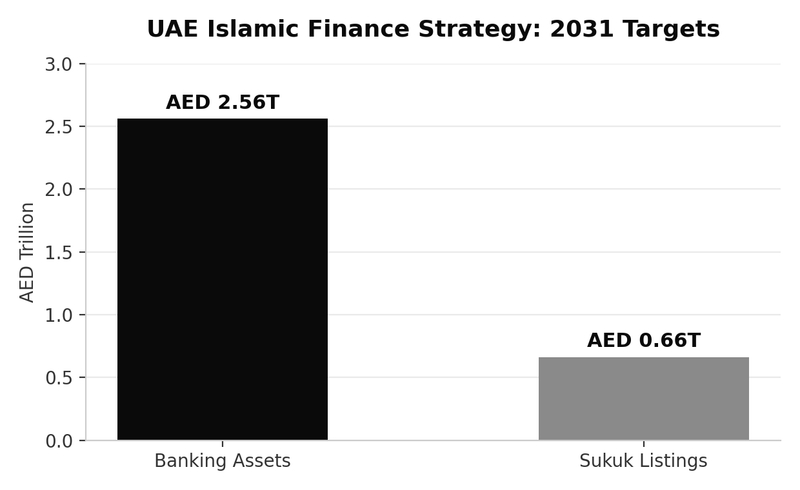
UAE Islamic Finance Strategy targets, 2025 to 2031
Source: Mordor Intelligence, Islamic Finance Market Report
When two very different markets, one converting an existing system and one scaling a new one, move in the same direction, it signals a shift that is bigger than any single institution or product.
Why Digital Products Fit This Shift Better Than Legacy Banks
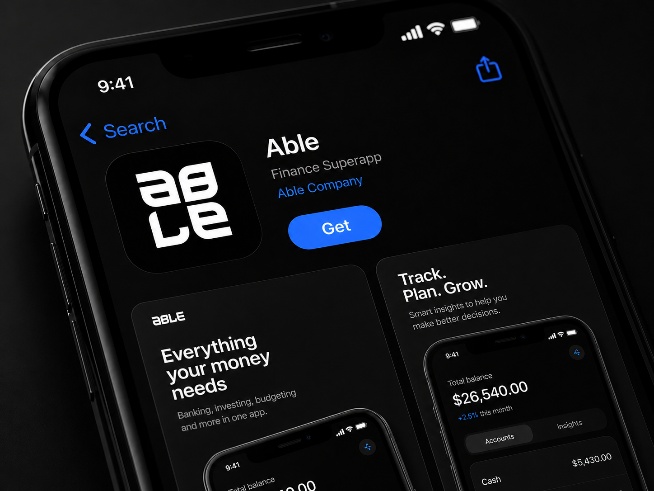
Digital onboarding and low ticket entry points fit the savings and spending behavior of younger cohorts far more naturally than the branch based model most Islamic banks inherited from conventional banking. A generation that already manages its money entirely from a phone is not going to walk into a branch to open a riba free account. It expects the same speed, design, and instant access it gets from every other app it uses, applied to a financial system that does not compromise on its values.
Source: Mordor Intelligence, Islamic Finance Market Report
What This Means for the Next Generation of Muslim Consumers
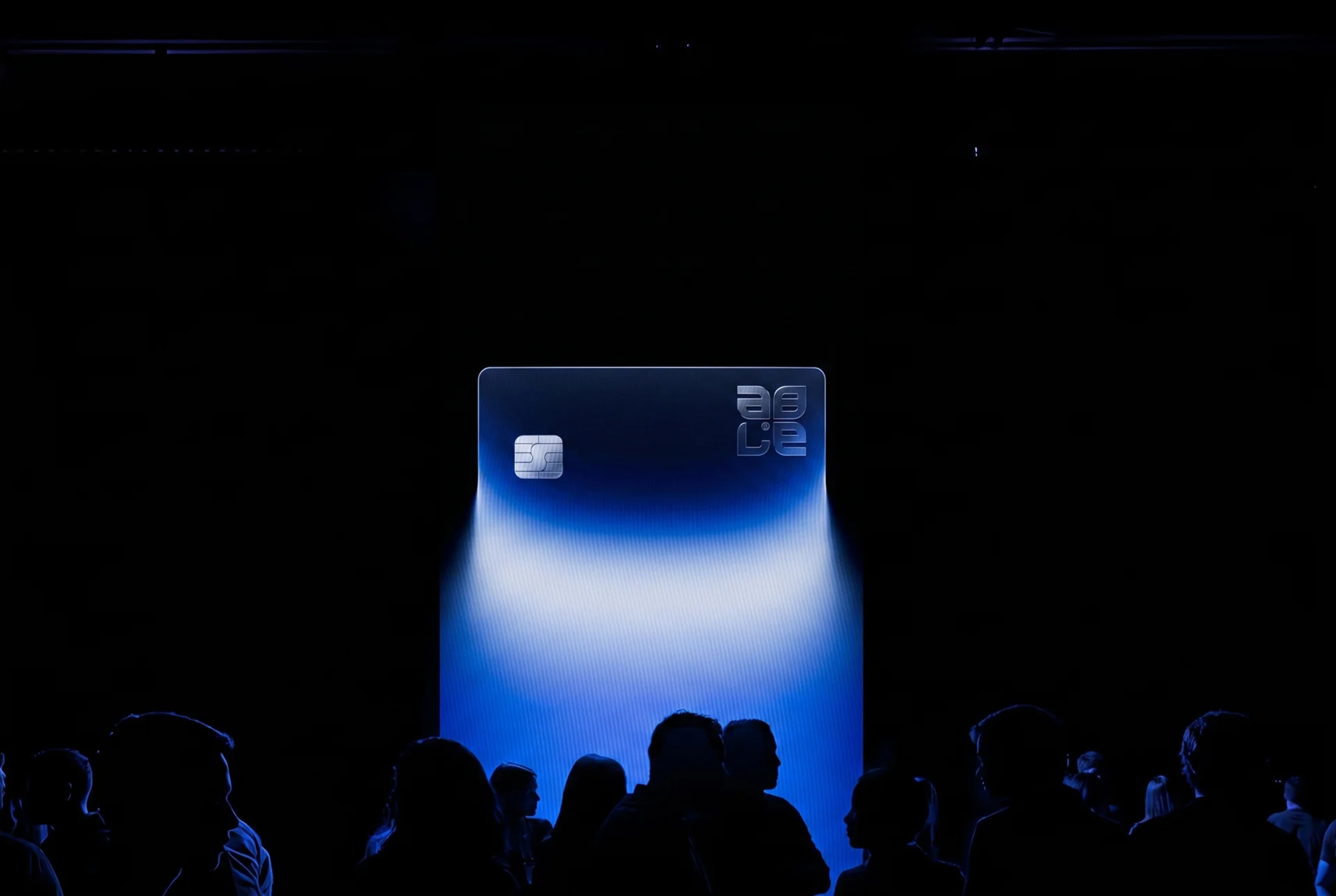
Riba free banking is no longer a specialist product for a small, highly observant segment. It is becoming the default expectation of a generation that grew up with more choice, more information, and less patience for financial products that ask them to compromise. Able is built around that expectation from the ground up, with a global spending card designed so users never have to choose between modern convenience and staying true to their principles.
//
early Access — UAE first
Be first. Be Able.
Join the waitlist now. UAE, Saudi Arabia, and Qatar launch first. Early users get priority onboarding, locked-in yield rates, and zero fees for the first year.