How Do Islamic Finance Contracts Actually Work Compared to a Conventional Loan?
Murabaha, Ijara, and profit-sharing explained: how Islamic finance contracts tie every return to a real transaction, and why 65% of the industry runs on one structure most people have never heard of.

Set a conventional mortgage and a halal home financing product side by side and they can look deceptively similar on the surface, a down payment, then monthly payments for years until the home is owned outright. The mechanics underneath are genuinely different, and understanding that difference is the fastest way to actually understand Islamic finance.
What's the Core Difference Between an Islamic Contract and a Conventional Loan?
A conventional loan lends money and charges interest for the use of that money over time. Islamic law does not recognize money itself as something that can generate a return simply by being lent. Instead, every Islamic finance contract ties the bank's profit to a real transaction: a sale, a lease, or a genuine ownership stake, where the bank earns a return because it participated in an actual economic activity, not because it fronted cash.
Source: Islamic Finance Calculator
How Does Murabaha Actually Work?
In a Murabaha contract, the bank purchases the asset itself, a home, a car, equipment, and then sells it to the customer at a disclosed markup, paid back in installments.
Source: Guidance Residential
The bank briefly owns the asset before selling it on, which is what makes its profit a trading margin rather than interest. Murabaha is by far the most widely used Islamic contract structure, accounting for 65% of Islamic finance transactions globally.
Source: Business Research Insights, Islamic Finance Market Report
How Does Ijara Work as a Halal Alternative to a Mortgage or Lease?
Ijara flips the structure again: the bank buys the property or equipment and leases it to the customer for a fixed rent, with a portion of each payment building toward eventual ownership. It is the second most common contract type, used in 21% of Islamic finance transactions, and it is the structure most often preferred where Murabaha's resemblance to conventional debt makes some scholars and customers uncomfortable.
Source: Guidance Residential
How Is Islamic Finance Actually Structured Across the Industry?
Zooming out from individual contracts, 78% of all Islamic finance assets sit inside banking, with capital markets instruments like sukuk making up another 17%, and takaful, Islamic insurance, accounting for the remaining 5%.
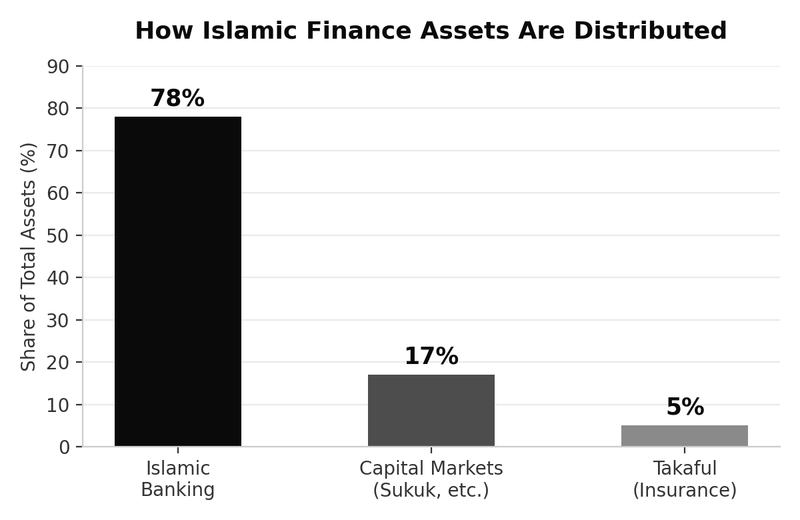
Share of global Islamic finance assets, by segment
Source: Business Research Insights, Islamic Finance Market Report
Does It Really Feel Different as a Customer?
For the person making the payments, an Islamic home or car financing product often feels close to identical to a conventional one, the same down payment, the same monthly schedule, the same eventual ownership. The difference is entirely in what sits underneath: who owns the asset at each stage, and whether the financier's return comes from a real transaction or from renting out money itself. That distinction is exactly why 58% of global Muslim consumers say they prefer financial products aligned with their ethical and religious principles, even when the day-to-day experience looks nearly the same as the conventional alternative.
Source: Business Research Insights, Islamic Finance Market Report
//
early Access — UAE first
Be first. Be Able.
Join the waitlist now. UAE, Saudi Arabia, and Qatar launch first. Early users get priority onboarding, locked-in yield rates, and zero fees for the first year.