How Much Are Foreign Transaction Fees Really Costing Muslim Travelers?
Muslim travel is heading toward 262 million travelers and $310 billion in spending by 2030, and most of it happens on cards charging 1.59% to 3% on every swipe abroad. Here is what those fees really add up to.
Muslim travel is one of the fastest growing segments in global tourism, but most of the cards travelers carry were never built with international spending in mind. Every swipe abroad quietly adds a fee most people never check for before they leave home.
What Is a Foreign Transaction Fee, Exactly?
A foreign transaction fee is a surcharge that a card issuer adds to any purchase made in a foreign currency or processed through a merchant outside the cardholder's home country. It typically runs between 1% and 3% of the transaction, and it applies every single time the card is used abroad, not just once per trip.
Source: Capital One
How Fast Is the Muslim Travel Market Growing?
International Muslim tourist arrivals are projected to reach 208 million in 2026, according to the Mastercard and CrescentRating Global Muslim Travel Index, up from 196 million the year before. By 2030, the market is expected to grow to 262 million travelers, generating an estimated $310 billion in annual spending.
Source: Global Muslim Travel Index 2026, via IndexBox
That is a lot of spending happening on cards that were not designed for it. A market this size deserves a card built around how and where its users actually travel, not a generic product with international spending bolted on as an afterthought.
How Much Extra Are Travelers Really Paying?
The average foreign transaction fee sits at 1.59% in 2026, according to WalletHub's Credit Card Landscape Report, though many cards charge closer to 3%. The cost multiplies further if a merchant offers to charge in the traveler's home currency instead of the local one, a practice called dynamic currency conversion, which typically adds another 7% on top.
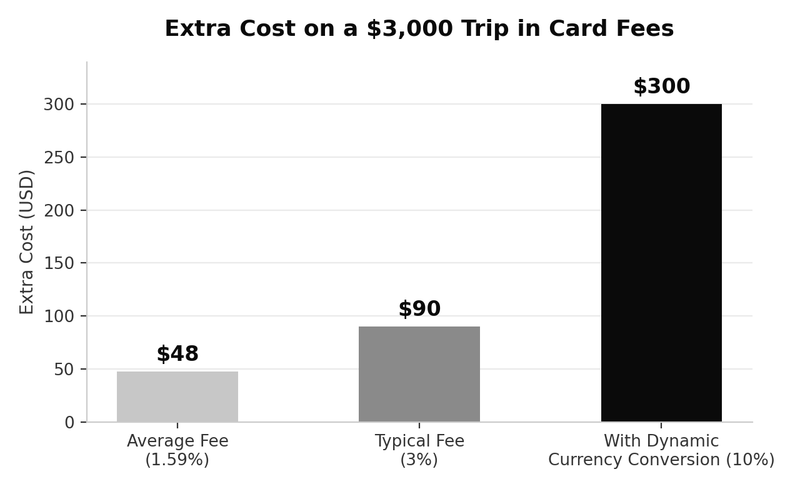
Estimated extra cost on a $3,000 trip, by fee type
Source: WalletHub Credit Card Landscape Report, via Upgraded Points
Why Do These Fees Still Exist in 2026?
84% of cardholders consider foreign transaction fees a rip off, and more than half say they would switch card providers to avoid paying them again.
Source: Navan, citing a 2025 WalletHub survey
The fee persists mainly because most travelers do not check for it before they book a trip, and because switching cards takes more effort than most people are willing to spend before a holiday. Around a quarter of cards on the market already waive the fee entirely, which shows it is not a cost of doing business abroad. It is a cost some issuers choose to keep charging simply because most cardholders never ask them to stop.
Source: WalletHub
What Should Muslim Travelers Look For in a Card?
For a traveler who splits time between home, family abroad, and destinations chosen partly for halal dining and prayer access, a card with no foreign transaction fees is not a nice to have. It is table stakes. The stronger question is whether the card was actually built around global spending, with fair conversion built in by design, or whether it simply waives one fee while quietly recovering the cost elsewhere.
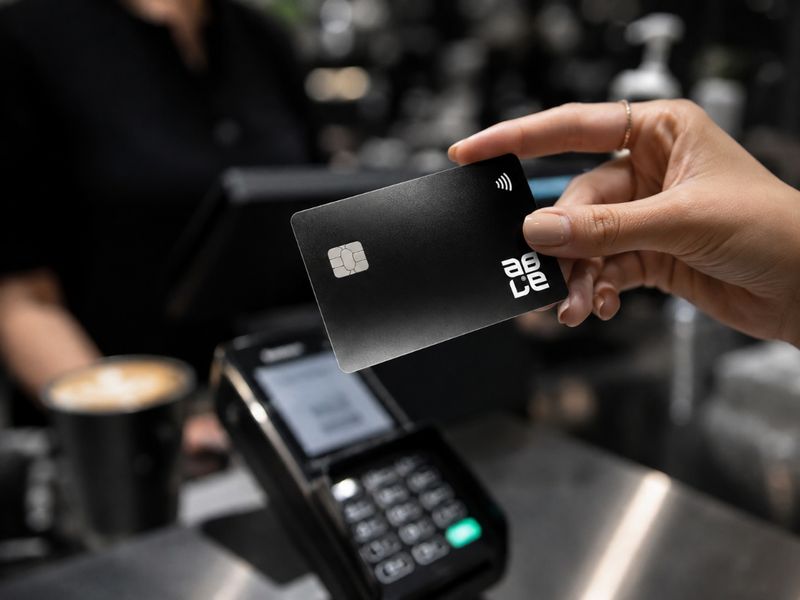
Able's global spending card was built for exactly this kind of traveler, someone who spends across borders regularly and expects their card to work the same way everywhere they go.
//
early Access — UAE first
Be first. Be Able.
Join the waitlist now. UAE, Saudi Arabia, and Qatar launch first. Early users get priority onboarding, locked-in yield rates, and zero fees for the first year.