Everything Credit, Everywhere Debt: Why the Credit Card Debt Crisis Needs a Real Alternative
Americans have paid $2.1T in credit card interest since 2010, with total debt crossing $1.27T. Here is why the credit system keeps failing everyday users, and why Islamic finance offers a real alternative.
In recent years, more and more people have started to realize that the global credit system is, to put it mildly, not built with the user's best interests at heart. A growing number of reports from Western media have started to highlight the financial strain that the credit system is putting on its everyday users.
The Credit Card Debt Crisis in America
A recent report by The Century Foundation shows how millions of people in the US alone are taking on financial responsibilities that become increasingly difficult to stay true to.
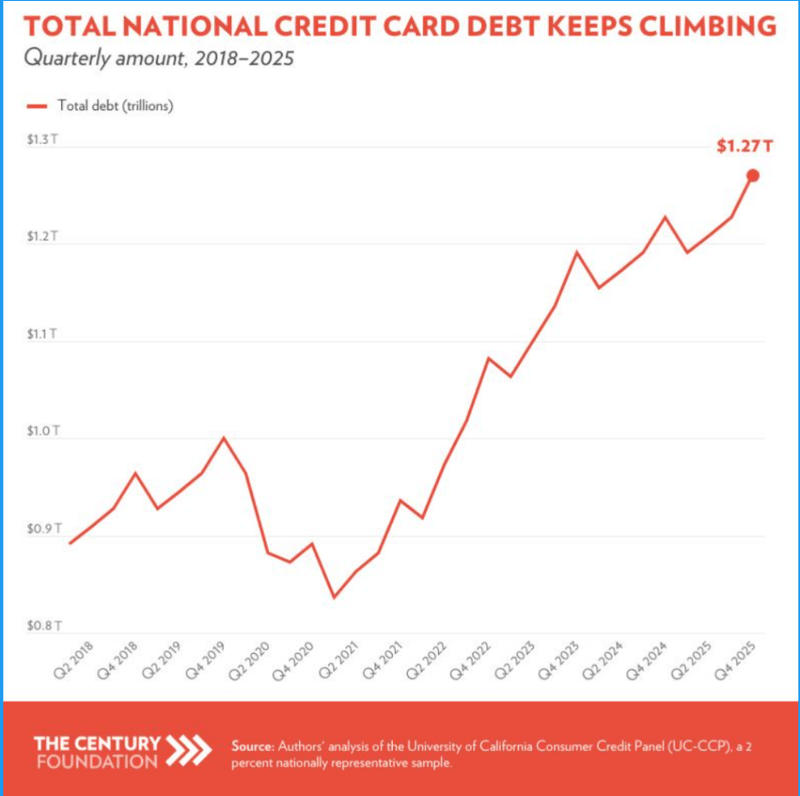
Source: The Century Foundation
Since 2010, Americans have paid $2.1T in credit card interest. Just interest. This money did not go to build universities and hospitals, fund research or art, or develop the economy by providing incentives for business. The only party that benefited from this is the banks that set the interest rates in the first place, and the only way they will use this new wealth is to expand their most profitable product: credit card debt issuance.
Unfortunately, this issue will continue to worsen, just as it has for the last sixteen years. Total national credit card debt in the US has crossed $1.27T, with 227M people, or 84% of the total adult population in the country, holding a credit card.
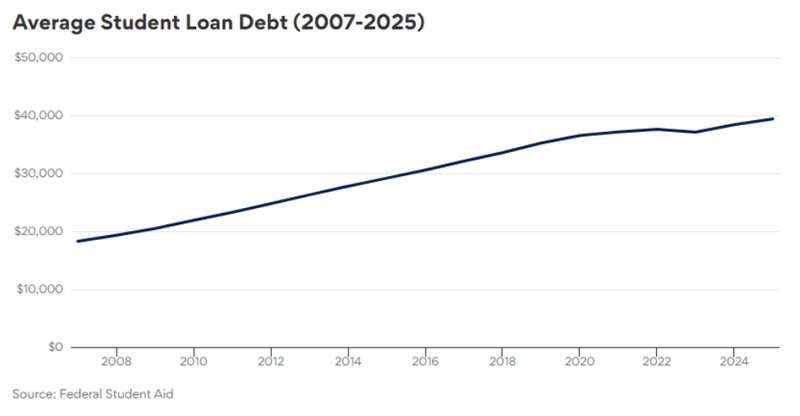
Source: BestColleges
Why Debt Feels Unavoidable for Everyday Americans
For a lot of Americans, their lives are rigged from the start. Whether it is the rising cost of living forcing them to take on debt to cover daily expenses, or student loans, medical bills, and mortgage payments, all of it is built on credit that enriches the system and gives little in exchange.
We have already seen where this leads, most visibly through the 2008 financial crisis in the US. And while most experts are sounding the alarm, they often go quiet when asked for a solution.
Islamic Finance as an Alternative to a Predatory Credit System
At Able, we look at news and reports from conventional finance through a different lens. There has always been a fair way to look at finance, a system built with everyone's best interest at its core: Islamic finance.
Telling an American to just avoid taking on unnecessary debt is not going to cut it. Building a financial system that allows people to grow their capital without playing by the rules of a predatory credit system will.
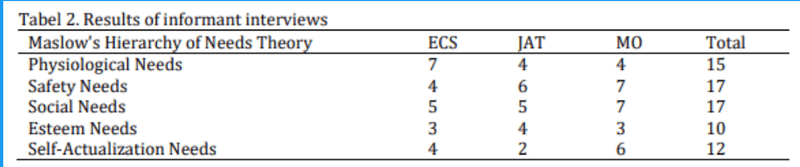
Source: Journal of Islamic Applied Social Science and Sustainable Finance
Why Non Muslims Are Turning to Islamic Finance Too
Islamic finance has never been exclusive to Muslims, and lately more and more non Muslim users have been turning to it for security and transparency in how their funds are handled. The asset backed, risk sharing structure at the core of Islamic finance is designed to avoid the kind of leverage driven collapses that hit conventional banks in 2008.
The reality hits quickly, however. Islamic finance is a relatively young industry, with the first Sharia compliant bank established in 1963. With the most prominent players based in Muslim majority regions like MENA and the Gulf, access has historically been difficult for a global audience. That is beginning to change now.

Source: LSEG Islamic Finance Development Report 2025
Islamic Finance Growth Projections Through 2029
The Islamic finance market is projected to grow by almost 50% over five years, from 2024 to 2029, with the rapid development of AI and blockchain technology among the biggest contributing factors for a market this young and fast moving.
With a target audience of nearly two billion Muslims worldwide, plus a growing non Muslim audience left without real alternatives to a predatory credit system, these numbers are just a single drop in a blue ocean of opportunity for every builder in the field.
Able is honored to be part of it.
//
early Access — UAE first
Be first. Be Able.
Join the waitlist now. UAE, Saudi Arabia, and Qatar launch first. Early users get priority onboarding, locked-in yield rates, and zero fees for the first year.